-
Shop
- AI Skills Mastery 2026 Collection
- Beauty Guides Collection
- Best-Sellers
- Car Accessories
- Dating & Social Skills
- Digital Resources
- Beauty
- Budgeting & Saving
- Car Buying & Ownership
- Cozy Feast Collection
- Dating & Social Confidence
- Electronics & Technology
- Emotional Intelligence
- Entrepreneurship & Business Growth
- Financial Independence
- Financial Mindset & Psychology
- Goal Setting
- Halloween Digital Collection
- Hobbies
- Home Styling & Organization
- Kitchen & Cooking
- Leadership
- Mindfulness
- Motivation
- Nutrition & Healthy Eating
- Parenting & Child Development
- Personal Style & Fashion
- Positive Thinking
- Productivity
- Self Confidence
- Sleep Improvement
- Smart Amazon Shopping
- Smart Black Friday Shopping
- Smart Life with AI
- Stress Management & Relaxation
- Thanksgiving Digital Collection
- Travel & Adventure
- Travel Planning
- Wellness & Self-Care
- Yoga & Mind-Body Practices
- Easter
- Education & Learning
- Family & Parenting
- Fashion
- Fashion Accessories
- Financial Education
- Fitness & Yoga Guides
- Gadgets
- Gift Guide Collection
- Gifts
- Health & Beauty
- Health & Wellness
- Home & Garden
- Home Supplies
- Kids & Babies
- Kitchen
- Mindset
- Online Business for Beginners
- Parenting Guides Collection
- Personal Growth
- Pet Care
- Pet Lifestyle & Wellness
- Pets
- Smart Home Living Guides
- Sport & Outdoors
- Stress Relief & Relaxation
- Super Deals
- TikTok Growth & Monetization Mastery
- Travel
- Valentine’s Day Inspiration
- Wealth
- Wealth Building
- Winter Fashion
- Women’s Wellness & Lifestyle
- YouTube Shorts Best-Sellers
- Popular
- Best deals
Hidden Storage Checklist: Tidy Living Room Zones
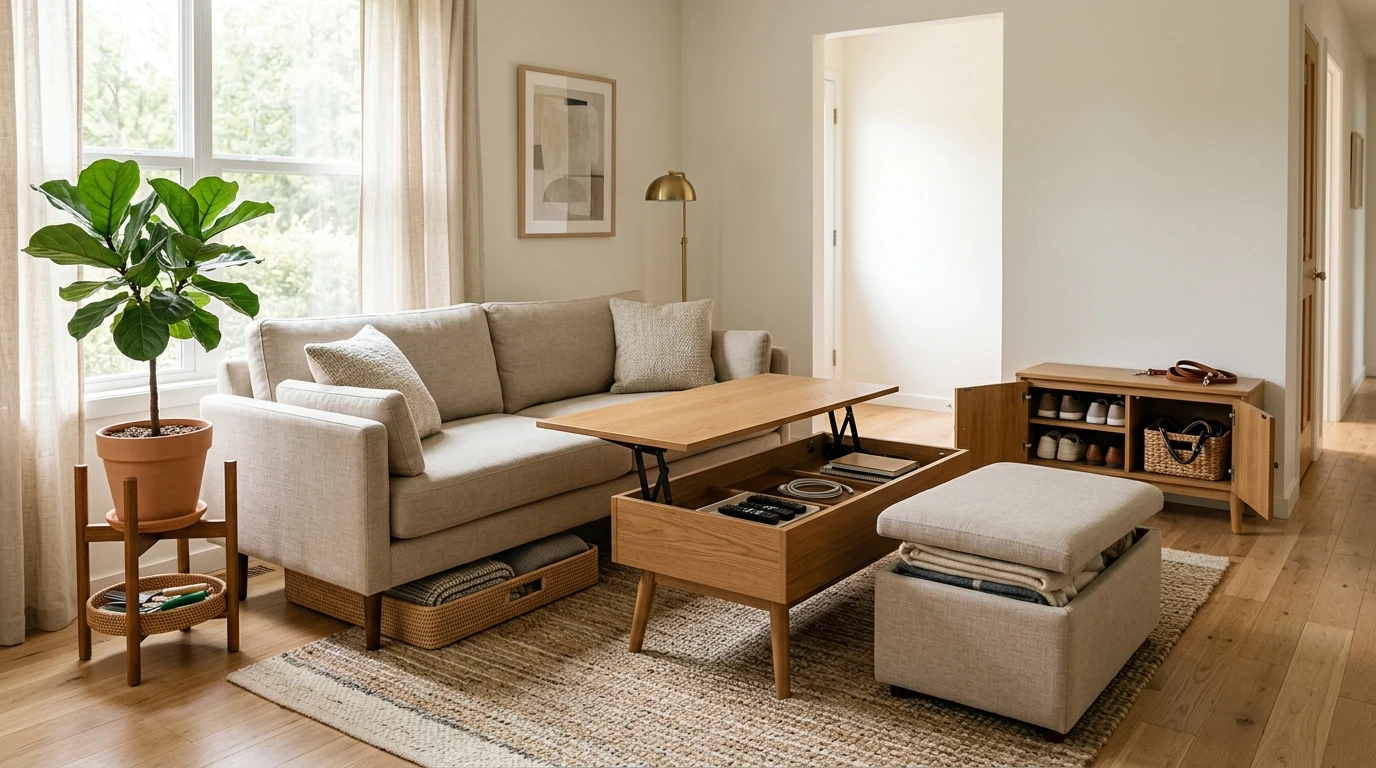
Hidden Storage That Blends In: A Checklist for Smarter Living Areas
A living area can feel crowded fast: blankets, remotes, toys, paperwork, pet gear, and everyday “just-in-case” items migrate to open surfaces. Hidden storage solves the visual noise without making the room feel like a closet. Use the checklist below to spot unused volume, choose the right concealment method, and set up simple zones that stay tidy with minimal effort.
What Counts as Hidden Storage (and What Doesn’t)
Hidden storage keeps items out of sight while staying easy to access—no moving heavy stacks, no unstacking bins, and no “digging expedition” required. The best setups feel like a natural part of the room, not a daily chore.
- Camouflaged storage uses furniture or decor that looks normal (ottomans, benches, framed art) but opens or conceals compartments.
- Architectural storage uses space around walls, corners, windows, and doors (behind art, inside shallow cabinets, or under radiators when safe).
- Avoid friction points: lids that require two hands, bins that don’t fit shelf depth, or storage that blocks outlets and vents.
Quick Room Scan: Find the Space You’re Not Using
A fast scan prevents the most common mistake: buying containers first and discovering they don’t fit anywhere.
- Measure first: sofa length, wall width behind the couch, clearance under furniture, and the depth available behind doors.
- Identify clutter categories: soft items (throws, pillows), small tech (remotes, chargers), paper (mail, manuals), and “occasionals” (candles, games).
- Mark high-traffic zones: your most-used seat, the entry path, and the surface that collects everything (often the coffee table).
- Pick two hiding spots: one “daily access” option (seconds to reach) and one “weekly access” option (about a minute to reach).
Checklist by Zone: Hidden Storage Ideas That Look Intentional
The most effective hidden storage is zone-based: you store items where they’re used, in a container that matches how often you reach for them.
Sofa zone
- Slim baskets that slide under a console table
- Sofa-side caddies for remotes, reading glasses, and hand cream
- Under-sofa bins (only if you have enough clearance to pull them out easily)
- A lift-top coffee table for chargers, controllers, and coasters
Wall zone
- Floating shelves with concealed compartments for small items you don’t want on display
- Shallow cabinets that read like trim (great for board games and paper clutter)
- A large frame or art piece that opens to hide routers or cord clusters
Corner zone
- Corner cabinets or a tall lidded hamper for throws
- A plant stand with a storage shelf below for baskets that “disappear” into the decor
- Nesting tables with interior space to stash magazines or small toys
Entry-adjacent zone (even if it’s part of the living room)
Kid/pet zone
- Lidded bins that match the room palette so the “toy zone” doesn’t look like a playroom spillover
- One “rapid reset” container for nightly pickup
- Store toys in ottomans rather than open cubes to keep visual calm (even plush favorites like the Cute Kawaii Lion Plush Toy)
| Zone | Best for | Hidden-storage option | Difficulty | Cost range |
|---|---|---|---|---|
| Under sofa | Blankets, games, seasonal decor | Low-profile rolling bins or soft zip bags sized to clearance | Easy | $ |
| Coffee table | Remotes, chargers, coasters, small toys | Lift-top table or table with drawers/hidden shelf | Medium | $$–$$$ |
| Behind couch | Books, mail station, board games | Narrow console table with baskets or doors | Easy | $$ |
| Wall near TV | Cords, routers, controllers | Art that opens, shallow cabinet, cable raceways + hidden box | Medium | $–$$ |
| Corners | Throws, extra pillows | Tall lidded hamper or corner cabinet | Easy | $–$$ |
| Entry edge | Shoes, leashes, small bags | Storage bench with closed front | Easy | $$ |
How to Make Hidden Storage Feel Effortless (Not Fussy)
For styling that keeps storage looking intentional (not like an afterthought), pull cues from your room’s theme—color, texture, and even a little mood. A decor-forward approach can help hidden storage blend in seamlessly, especially if you’re building a cozy, curated vibe like the ideas in Enchant Your Space with Witchy Home Styling | Digital Guide for Magical Home Decor & Inspiration.
Renter-Friendly and Safety Notes
- Choose non-permanent options: freestanding consoles, adhesive cable channels, tension-rod solutions inside cabinets, and removable hooks rated for weight.
- Keep airflow clear: don’t block vents, radiators, or electronics ventilation, and don’t stash power strips under piles of fabric. Review basic home electrical safety guidance from the NFPA.
- Anchor tall storage when needed: especially in homes with kids or pets; follow manufacturer instructions and consult CPSC tip-over prevention recommendations.
- Plan for cleaning access: hidden storage should still allow vacuuming and dusting without moving the entire room.
A Simple 30-Minute Setup Plan
Printable Guidance for Faster Decisions
A ready-to-use checklist helps spot overlooked spaces, prioritize the highest-impact changes, and avoid buying containers that don’t fit. For a structured, room-by-room plan with prompts and a repeatable system, use The Hidden Storage Checklist for Clever Living Areas | Digital Home Organization Guide | How to Create Hidden Storage in Living Areas.
FAQ
What are the best hidden storage ideas for a small living room?
Prioritize dual-purpose pieces like ottomans and lift-top coffee tables, then use under-sofa clearance and narrow consoles behind the couch. Keep daily essentials in one-hand-access storage so tidying doesn’t feel like a project.
How can hidden storage work if the living room is used by kids or pets?
Choose lidded, sturdy containers, keep one rapid-reset bin for fast pickups, and contain cords inside enclosed boxes. Anchor tall furniture when needed and avoid small parts that could become hazards.
How do you keep hidden storage from becoming a “junk drawer” problem?
Use one container per category, set a clear capacity limit, and label inside lids so items return to the right place. A quick weekly edit prevents overflow from turning into a mystery pile.
Recommended for you


Hidden Storage Ideas: Sneaky Spots to Declutter Fast
Aug 29, 2026
Hidden Sofa Storage Ideas for Any Couch or Sectional
Aug 30, 2026













Leave a comment