-
Shop
- AI Skills Mastery 2026 Collection
- Beauty Guides Collection
- Best-Sellers
- Car Accessories
- Dating & Social Skills
- Digital Resources
- Beauty
- Budgeting & Saving
- Car Buying & Ownership
- Cozy Feast Collection
- Dating & Social Confidence
- Electronics & Technology
- Emotional Intelligence
- Entrepreneurship & Business Growth
- Financial Independence
- Financial Mindset & Psychology
- Goal Setting
- Halloween Digital Collection
- Hobbies
- Home Styling & Organization
- Kitchen & Cooking
- Leadership
- Mindfulness
- Motivation
- Nutrition & Healthy Eating
- Parenting & Child Development
- Personal Style & Fashion
- Positive Thinking
- Productivity
- Self Confidence
- Sleep Improvement
- Smart Amazon Shopping
- Smart Black Friday Shopping
- Smart Life with AI
- Stress Management & Relaxation
- Thanksgiving Digital Collection
- Travel & Adventure
- Travel Planning
- Wellness & Self-Care
- Yoga & Mind-Body Practices
- Easter
- Education & Learning
- Family & Parenting
- Fashion
- Fashion Accessories
- Financial Education
- Fitness & Yoga Guides
- Gadgets
- Gift Guide Collection
- Gifts
- Health & Beauty
- Health & Wellness
- Home & Garden
- Home Supplies
- Kids & Babies
- Kitchen
- Mindset
- Online Business for Beginners
- Parenting Guides Collection
- Personal Growth
- Pet Care
- Pet Lifestyle & Wellness
- Pets
- Smart Home Living Guides
- Sport & Outdoors
- Stress Relief & Relaxation
- Super Deals
- TikTok Growth & Monetization Mastery
- Travel
- Valentine’s Day Inspiration
- Wealth
- Wealth Building
- Winter Fashion
- Women’s Wellness & Lifestyle
- YouTube Shorts Best-Sellers
- Popular
- Best deals
Product Description
Discover the Secrets to Verifying Authentic Versace with Confidence
If you’re a luxury shopper or a fashion enthusiast, knowing how to identify authentic Versace pieces is essential. With counterfeit products flooding the market, it’s more important than ever to have a reliable guide that helps you separate the real from the fake. “Versace Authenticity Check Made Simple” is the perfect solution. This comprehensive eBook walks you through the process of verifying Versace items, ensuring you never fall victim to fraudulent goods again. Whether you’re buying a new handbag, a pair of shoes, or a statement piece of clothing, this guide empowers you to make informed, confident purchases.
Key Features & Contents:
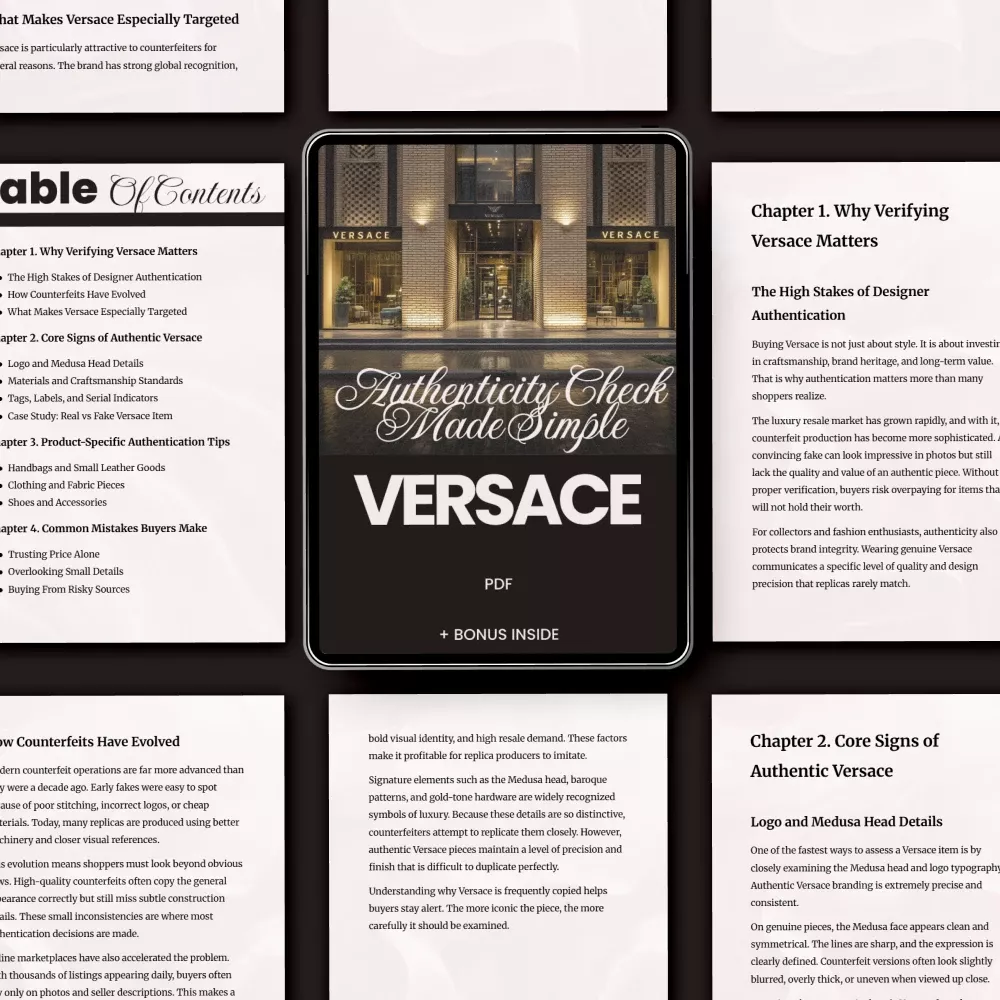
- Chapter 1: Why Verifying Versace Matters – Understand the importance of authenticity in luxury shopping.
- Chapter 2: Core Signs of Authentic Versace – Learn about the distinct features of real Versace, including the logo, Medusa Head details, materials, craftsmanship, and more.
- Chapter 3: Product-Specific Authentication Tips – Focus on handbags, clothing, shoes, and accessories, with expert tips for each category.
- Chapter 4: Common Mistakes Buyers Make – Discover common errors and how to avoid them when purchasing Versace items.
- Chapter 5: Using AI to Spot Fake Versace – Learn how to use AI image analysis tools and create a personalized verification workflow.
- Chapter 6: Smart Buying Habits for Luxury Shoppers – Find out where to shop safely and how to protect your investments.
- Chapter 7: Your Next Steps for Confident Luxury Shopping – Access a quick verification checklist and tips on when to seek professional authentication.
Practical Benefits:
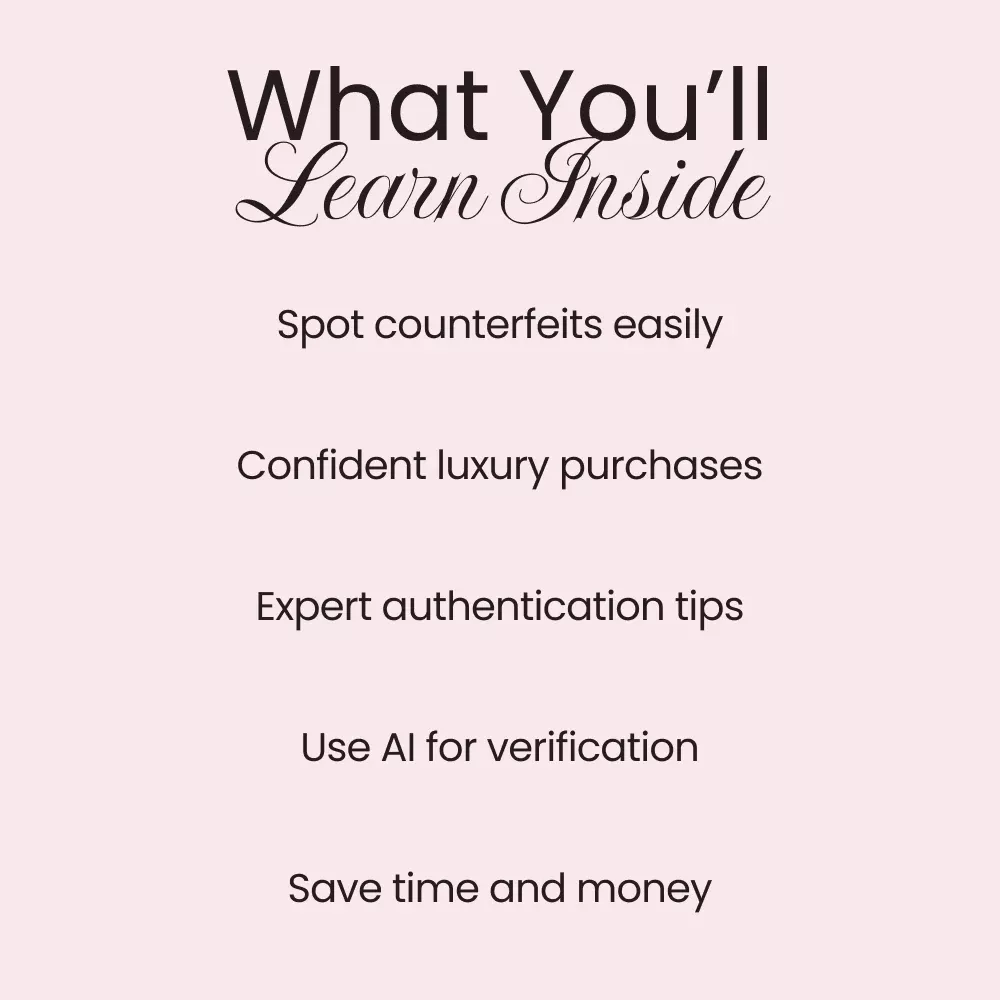
- Save time and money by ensuring you’re buying genuine Versace items.
- Gain peace of mind with expert knowledge and actionable steps for verifying Versace authenticity.
- Stay ahead of counterfeiters with the latest tips and AI tools for detecting fake Versace products.
- Boost your confidence when shopping for luxury Versace products online or in stores.
Who Is This Guide For?
This eBook is designed for anyone who is passionate about owning genuine luxury items—whether you’re an experienced collector, a fashion lover, or someone just starting to invest in designer pieces. If you’re tired of worrying about counterfeit products, this guide is your ultimate solution.
What Makes This Guide Different?
Unlike other generic guides, Versace Authenticity Check Made Simple is specifically tailored to the Versace brand. It goes beyond the basics and dives deep into the subtle details that only experts know. With practical, easy-to-follow tips, this eBook gives you the tools to spot a fake from a mile away. Whether it’s understanding the craftsmanship of a handbag or using AI to verify authenticity, you’ll be well-equipped to shop with confidence.
Ready to Make Smart Luxury Purchases?
Download Versace Authenticity Check Made Simple today and start your journey toward becoming a savvy, confident shopper. Whether you’re upgrading your wardrobe or investing in a Versace piece, this guide ensures you’ll always know you’re getting the real deal. Don’t risk your investment—click below to get your copy now!
Shipping & Delivery
SHIPPING
We are proud to offer international shipping services that currently operate in over 200 countries and islands world wide. Nothing means more to us than bringing our customers great value and service. We will continue to grow to meet the needs of all our customers, delivering a service beyond all expectation anywhere in the world.
Do you ship worldwide?
Yes. We provide free shipping to over 200 countries around the world. However, there are some locations we are unable to ship to. If you happen to be located in one of those countries we will contact you.
What about customs?
We are not responsible for any custom fees once the items have been shipped. By purchasing our products, you consent that one or more packages may be shipped to you and may get custom fees when they arrive to your country.
How long does shipping take?
Shipping time varies by location. These are our estimates:| Location | *Estimated Shipping Time |
|---|---|
| United States | 5-20 Business days |
| Canada, Europe | 5-20 Business days |
| Australia, New Zealand | 5-20 Business days |
| Central & South America | 5-25 Business days |
| Asia | 5-20 Business days |
| Africa | 5-25 Business days |
Do you provide tracking information?
Yes, you will receive an email once your order ships that contains your tracking information. If you haven’t received tracking info within 5 days, please contact us.
My tracking says “no information available at the moment”.
For some shipping companies, it takes 2-5 business days for the tracking information to update on the system. If your order was placed more than 5 business days ago and there is still no information on your tracking number, please contact us.
Will my items be sent in one package?
For logistical reasons, items in the same purchase will sometimes be sent in separate packages, even if you've specified combined shipping.
If you have any other questions, please contact us and we will do our best to help you out.
RETURNS
Order cancellation
All orders can be cancelled until they are shipped. If your order has been paid and you need to make a change or cancel an order, you must contact us within 12 hours. Once the packaging and shipping process has started, it can no longer be cancelled.
Refunds
Your satisfaction is our #1 priority. Therefore, you can request a refund or reshipment for ordered products if:
- If you did not receive the product within the guaranteed time (45 days not including 1-3 day processing) you can request a refund or a reshipment.
- If you received the wrong item you can request a refund or a reshipment.
- If you do not want the product you’ve received you may request a refund but you must return the item at your expense and the item must be unused.
We do not issue the refund if:
- Your order did not arrive due to factors within your control (i.e. providing the wrong shipping address)
- Your order did not arrive due to exceptional circumstances outside the control of valuablegoodsvault.shop (i.e. not cleared by customs, delayed by a natural disaster).
- Other exceptional circumstances outside the control of valuablegoodsvault.shop.
*You can submit refund requests within 15 days after the guaranteed period for delivery (45 days) has expired. You can do it by sending a message on Contact Us page
If you are approved for a refund, then your refund will be processed, and a credit will automatically be applied to your credit card or original method of payment, within 14 days.
Exchanges
If for any reason you would like to exchange your product, perhaps for a different size in clothing, you must contact us first and we will guide you through the steps.
Please do not send your purchase back to us unless we authorise you to do so.
Refunds & Returns
Order cancellation
All orders can be cancelled until they are shipped. If your order has been paid and you need to make a change or cancel an order, you must contact us within 12 hours. Once the packaging and shipping process has started, it can no longer be cancelled.
Refunds
Your satisfaction is our #1 priority. Therefore, you can request a refund or reshipment for ordered products if:
- If you did not receive the product within the guaranteed time( 45 days not including 2-5 day processing) you can request a refund or a reshipment.
- If you received the wrong item you can request a refund or a reshipment.
- If you do not want the product you’ve received you may request a refund but you must return the item at your expense and the item must be unused.
We do not issue the refund if:
- Your order did not arrive due to factors within your control (i.e. providing the wrong shipping address)
- Your order did not arrive due to exceptional circumstances outside the control of valuablegoodsvault.shop (i.e. not cleared by customs, delayed by a natural disaster).
- Other exceptional circumstances outside the control of
*You can submit refund requests within 15 days after the guaranteed period for delivery (45 days) has expired. You can do it by sending a message on Contact Us page
If you are approved for a refund, then your refund will be processed, and a credit will automatically be applied to your credit card or original method of payment, within 14 days.
Exchanges
If for any reason you would like to exchange your product, perhaps for a different size in clothing. You must contact us first and we will guide you through the steps.
Please do not send your purchase back to us unless we authorise you to do so.
Customer Reviews
See why hundreds love this product and trust us
Based on 57 reviews
Write a Review
We Think You’ll Love
Top picks just for you













I almost bought a fake Versace bag last month from a resale site — the listing looked flawless. After reading this guide, I went back and checked the photos using the verification workflow from Chapter 5. The Medusa lines were soft, the stitching spacing was uneven, and the interior tag font looked off. Three red flags I never would have caught before. Saved myself over $800.
The product-specific tips for shoes are exactly what I needed 🔥
This turned authentication from something intimidating into a simple routine I can do in minutes.
The real vs fake case study made everything click. Seeing the subtle differences laid out side by side trained my eye faster than months of browsing forums.
Solid guide, very thorough on handbags and leather goods. I'd love to see more coverage on Versace jewelry and watches since those are heavily counterfeited too.
The point about counterfeiters pricing fakes in the mid-to-high range blew my mind. I always assumed a reasonable price meant it was safe.
Clean, practical, no fluff.
I've been collecting Versace shirts for about three years, mostly from resale platforms. I always thought I had a decent eye for spotting fakes, but after going through the clothing authentication section I realized I'd been skipping the most important checks entirely. I was looking at prints and vibes but never once checked pattern alignment across seams or examined the weight of the fabric closely. Went back through my collection and one shirt felt noticeably thinner and shinier than the rest — the baroque print also broke awkwardly at the shoulder seam. Pretty sure it's not authentic. Expensive lesson, but this guide means it won't happen again.
Shared this with my sister before her first resale purchase and she caught a fake within an hour 👀
The AI prompt examples are immediately usable. No guessing, no vague advice.
Every section builds on the last in a way that actually sticks.
Good information throughout. My only critique is that the AI tools section stays fairly general — I was hoping for specific platform recommendations or comparison of authentication apps.
The questions to ask sellers section gave me confidence I didn't have before. I used to feel awkward requesting close-up photos, but now I see it as the bare minimum. Three sellers have responded professionally and one ghosted me — which told me everything I needed to know about that listing.
Hardware weight as an indicator was new to me. Such a simple check.
🖤✨👜🔍
The verification workflow concept — gathering the same set of photos every time and running them through a consistent process — transformed how I shop. It took the anxiety completely out of resale buying.
I authenticate items as a side gig and even I picked up new details from this. The section on label formatting consistency was especially sharp.
Read it, used it, caught a fake. That's all I needed.
Decent overview for beginners. Some of the advice felt a bit obvious if you've been shopping luxury for a while — like checking stitching or buying from reputable sources. The AI integration angle adds something new though.
The smart buying habits chapter should be mandatory reading before anyone opens a resale app. I was buying from whoever had the best listing photos without checking seller history at all. The guide's point about transparency being a positive signal changed my filtering process entirely.
Concise and immediately actionable ✨
Saved me from a bad purchase on my first try.
The way this breaks down authentication by product category is smart. Bags, clothing, and shoes each have different tells and the guide doesn't pretend one checklist fits all.
I've been burned twice buying Versace online — once on a belt and once on a baroque print shirt. Both times I trusted the overall look without zooming in. This guide hammered home that authentication comes from accumulating small observations, not one big tell. I now spend an extra five minutes on every listing doing the structured check from Chapter 7 and it's become second nature. The section on how counterfeits have evolved was eye-opening too — I had no idea how sophisticated modern fakes have gotten. Would have saved myself close to $600 if I'd had this earlier. Already recommended it to three friends who shop resale.
The note about dust bags and boxes being easy to fake was a wake-up call. I'd been using packaging as a major trust signal.
Useful guide with a logical flow. I would have appreciated more visual examples or side-by-side comparisons within the text to reinforce the written descriptions, especially in the case study.
Print alignment across seams — never thought to check that until now 🤯
Thorough without being overwhelming.
The prompt examples alone are worth the download. I copied them into my notes and use them every time I'm evaluating a listing now.
Helpful starting resource. A few sections could go deeper — the shoe authentication tips felt thinner than the handbag section, and I buy mostly footwear.
My mom has been wanting a Versace bag for years and I was terrified of accidentally buying her a fake for her birthday. This guide walked me through exactly what to look for — the Medusa symmetry check, the hardware weight test, the interior label inspection. I spent an evening comparing three listings using the verification workflow and confidently picked one. When she opened it, the quality spoke for itself. Crisp logo, solid hardware, perfect stitching. The relief of knowing it's real made the gift ten times better.
Finally a guide that treats the reader like an adult instead of just saying "buy from the boutique."
👑🔥👌
The layered approach — price check, visual inspection, seller research, AI scan — is exactly right. No single method catches everything.
Practical and well-organized. Felt like talking to a knowledgeable friend rather than reading a textbook.
Good content but covers some ground that's widely available in free YouTube videos. The AI workflow section is where it differentiates itself — that part felt fresh and useful.
I now check interior tags on everything. This guide made me realize how much information is hiding inside a garment.
The section on why Versace is especially targeted makes the rest of the guide feel urgent. Once you understand the incentive structure behind counterfeiting, you take authentication way more seriously.
Short and sharp. Didn't waste my time.
I've spent years on replica forums (just reading, not buying) and I can confirm the details in this guide are accurate. The point about fakes getting the general look right but missing construction subtleties is dead on. Where this guide adds value is turning that knowledge into a repeatable system instead of relying on gut feeling 💯
The mental checklist from Chapter 7 is pinned to my phone's notes app now.
Learned more from this than from three authentication subreddits combined.
Helpful framework overall. I'd rate it higher if it included a section on Versace Jeans Couture versus mainline Versace, since that's a common confusion point for newer buyers that leads to overpaying.
My wife and I both read this before buying her a Versace Palazzo bag from a consignment shop. We ran through the full checklist together on FaceTime with the seller. Medusa was crisp and symmetrical, hardware had real weight, interior label was sharp. The seller was impressed we knew what to ask for. Bag arrived and everything matched perfectly. This guide basically functioned as our personal authenticator for free.
Straightforward enough for a first-time buyer, detailed enough for someone who's been shopping resale for years.
Using AI as a first-pass filter and not the final verdict — that framing is so important and most people miss it.
Worth it for the seller questions section alone.
The guide makes a great point that authentication is rarely about one dramatic flaw. It's about stacking small observations. That mindset shift made me a way more careful buyer across all luxury brands, not just Versace.
🔍👜✅⭐🔥
Well-written and no-nonsense.
Solid but I wanted more on vintage Versace authentication since older pieces have different labeling conventions that can trip up even knowledgeable buyers.
I buy Versace accessories as investment pieces and the section on protecting your purchase after buying was a nice touch. Most guides stop at "is it real" — this one keeps going into storage, documentation, and long-term care. That's the kind of thinking that protects resale value down the line 👏
Made me feel like I can actually trust my own judgment when shopping.
The evolution of counterfeits section is sobering. Fakes aren't what they used to be and this guide respects that reality instead of pretending spotting them is easy.
Exactly the structured approach I was looking for.
I bought a Versace chain reaction sneaker off a marketplace last year feeling pretty confident about it. Read this guide out of curiosity and decided to re-examine the pair. The sole alignment was slightly off on the left shoe, the interior stamping was faintly smudged compared to a pair I later saw in-store, and the edge painting had small inconsistencies I'd originally dismissed as normal. I can't say for certain it's fake without professional authentication, but the number of small flags this guide taught me to notice was uncomfortable. Now I never skip the structured check. The part about packaging being unreliable as proof especially resonated — I'd been showing friends the box and dust bag like that settled the question.
Covers bags, clothing, and shoes without feeling rushed on any of them.